China Top 10 Lip Gloss Filler Machine Suppliers?

Time:2026-10-16 Author:Isabella
0%

Choosing the right Lip Gloss Filler Machine supplier requires more than comparing prices or browsing polished factory photos. This article introduces ten leading suppliers serving cosmetic manufacturers, private-label brands, and growing beauty companies. The list considers filling accuracy, machine speed, material compatibility, cleaning access, technical support, and documented production experience. A good machine should handle thick gloss, shimmer formulas, and different package sizes without excessive dripping or product waste.

Packaging automation specialist Sean Riley has stated, “Reliable filling begins with repeatable process control, not speed alone.” That principle matters on a real production floor. A stainless-steel hopper, heated filling path, servo-driven piston, and adjustable nozzle can influence daily consistency. Small details matter. Even a poorly designed clamp may slow changeovers or complicate sanitation. Suppliers should explain these details clearly, not hide behind impressive specifications.

This guide does not treat any ranking as permanent. Market reputation changes. After-sales service can vary between regions, and a machine that performs well for one formula may struggle with another. Buyers should request samples, test viscosity, inspect finished containers, and confirm spare-parts availability before signing a purchase agreement. Compliance documentation and operator safety also deserve careful review. Sometimes, the cheapest quotation becomes expensive after installation. That is not always true, but it happens often enough to question. The strongest Lip Gloss Filler Machine suppliers combine practical engineering, transparent communication, stable quality control, and responsive support. Their value appears during production, not only during a sales presentation.
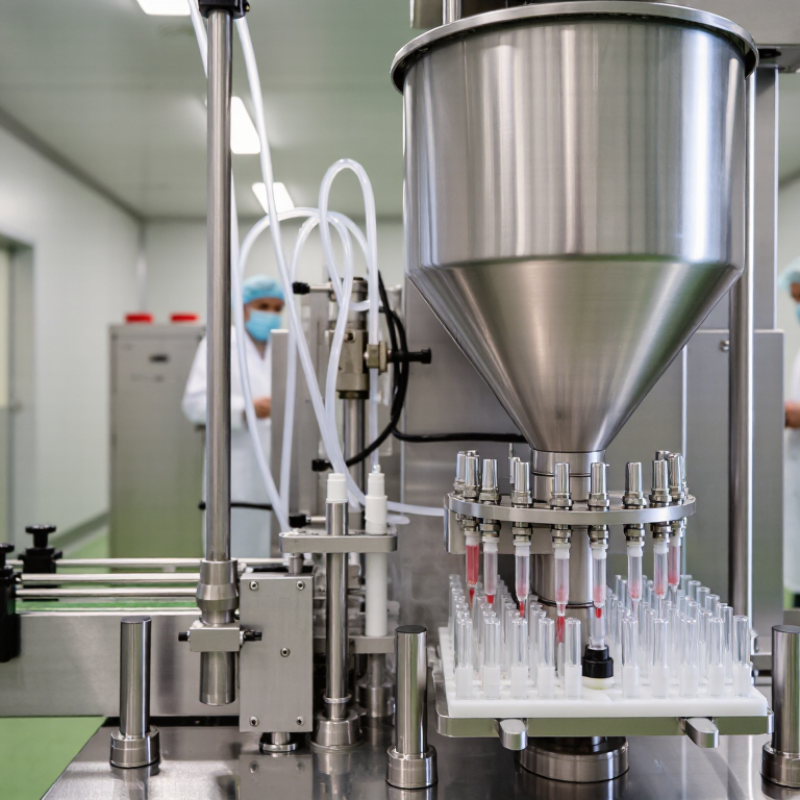
China Top 10 Lip Gloss Filler Machine Suppliers?

What Defines a Lip Gloss Filler Machine Supplier in China’s Top 10?

A supplier belongs in China’s top 10 when its equipment performs reliably beyond a showroom demonstration. Practical experience matters. Engineers should understand lip gloss viscosity, glitter particles, temperature sensitivity, and stringing during filling. A useful machine may include a heated hopper, servo-driven piston, anti-drip nozzle, and adjustable filling speed. These details affect appearance, weight consistency, and production waste.

Professional suppliers provide evidence, not only attractive specifications. Ask for filling trials using your actual gloss formula and packaging. Request recorded accuracy results, cleaning procedures, electrical diagrams, and material certificates for product-contact parts. A strong factory explains how operators change formats, remove trapped material, and control air bubbles. It should also offer factory acceptance testing, installation guidance, spare parts, and responsive technical support. Some suppliers provide impressive videos, but videos cannot replace measurable test data.

Authority develops through repeated projects, trained engineers, and transparent quality systems. Reliability appears in traceable components, clear delivery terms, inspection records, and realistic performance promises. Check whether the supplier can support different container sizes without costly redesign. Ask how quickly worn seals or nozzles can be replaced. Small delays matter.

No supplier is perfect. I would still examine its weaknesses. Does documentation contain unclear translations? Are cleaning steps too vague? Can the machine maintain stable dosing after several hours? These questions reveal more than a ranking list. A dependable supplier welcomes independent inspection and records problems honestly, because long-term cooperation requires evidence, patience, and practical accountability.

What Defines a Top Lip Gloss Filler Machine Supplier in China?

Practical evaluation framework based on the key purchasing criteria used for cosmetic filling equipment

A strong supplier is evaluated through more than machine price. Filling accuracy, production capacity, compatibility with high-viscosity gloss formulas, hygienic design, automation, customization, documentation, and after-sales support are essential factors. The 100-point weighting shown above is a practical buyer-oriented benchmark for comparing suppliers without ranking individual companies or brands.

How the Top 10 Suppliers Achieve ±1% Filling Accuracy and 30–60 BPM

China’s leading lip gloss filler machine suppliers target ±1% filling accuracy at 30–60 bottles per minute. That range suits medium-scale cosmetic production. It also limits heat, air exposure, and product waste.

Achieving ±1% is not a single-feature task. Servo-driven pistons control volume, while load cells verify each dosing cycle. Diving nozzles reduce stringing and splashing. Many systems also use PLC recipes, pressure sensors, and automatic compensation. PMMI’s 2023 Automation Trends report identifies digital controls and connected inspection as major packaging investment areas. This supports tighter process monitoring, but real performance still depends on viscosity, nozzle design, and operator setup. A thick gloss can behave differently after only a small temperature change. Real factories know this.

Tip: Test accuracy with the actual gloss formula. Record ten consecutive fills at startup, mid-run, and shutdown. Do not trust one sample.

At 30–60 BPM, suppliers normally balance speed against settling time and container stability. A machine may reach 60 BPM with small tubes, yet achieve only 35 BPM with wide-mouth bottles. Smithers’ packaging outlook reports continued demand for flexible, convenient cosmetic packaging, increasing pressure for adaptable filling lines. However, published speed figures often represent ideal conditions. They may exclude cleaning, refilling, rejects, and manual inspection. Buyers should request a witnessed factory acceptance test, using their containers and formula. Check average weight, standard deviation, changeover time, and reject rate. ±1% sounds excellent, but it needs documented evidence.

Which Machine Types Support Lip Gloss Viscosities of 10,000–100,000 mPa·s?

Which Machine Types Support Lip Gloss Viscosities of 10,000–100,000 mPa·s?

For lip gloss at 10,000–100,000 mPa·s, machine choice depends on more than viscosity. Heated piston fillers and servo-driven auger fillers are usually strong options. A jacketed hopper can warm the bulk gently and reduce flow resistance. Positive-displacement dosing helps maintain volume when gloss contains shimmer, waxes, or dense pigments. Servo control allows slower filling near the tube shoulder. That matters. It reduces splashing and trapped air. For extremely thick formulas, a twin-screw or progressive-cavity system may provide steadier transfer, but each formula behaves differently.

Tips: Request a product trial using your actual gloss. Test filling speed, nozzle diameter, heating temperature, and shut-off accuracy. Check whether the machine cleans easily between shades. A peristaltic pump may work for softer gloss, but it can struggle near 100,000 mPa·s. Do not trust viscosity numbers alone. Measure the product at its real filling temperature.

One practical warning remains. A machine can perform well during testing and fail after overnight cooling. I have seen minor temperature changes create large dosing differences. This is why hopper insulation, heated lines, and adjustable back pressure deserve careful review. Operators also need simple controls. Complex settings invite inconsistent results. Even a good machine may need refinement after production begins.

How to Compare Automation, Servo Control, Hygiene, and CE Compliance

When comparing China’s top 10 lip gloss filler machine suppliers, evaluate production evidence, not brochure language. Ask for samples using your actual gloss formula, including glitter, oils, and high-viscosity bases. A stable trial should show fill-weight variation, heating consistency, nozzle control, and changeover time. Demonstration videos are useful, but they can hide difficult cleaning points.

Automation levels vary widely. A basic pneumatic system may suit small batches, while servo-driven pistons provide finer volume control and repeatable dosing. Check whether the servo parameters are adjustable through a protected touchscreen. Record the response at different fill volumes. Faster is not always better. Excessive speed can create bubbles, splashing, or uneven container levels. A practical supplier should explain these limits clearly.

Hygiene requires close inspection. Product-contact parts should use suitable stainless steel, smooth welds, and tool-light disassembly. Look for dead corners around valves, pumps, and filling nozzles. Ask how seals are identified and replaced. CE compliance should include a risk assessment, technical documentation, an EU Declaration of Conformity, and relevant safety instructions. A CE mark alone proves little. That matters. I would also inspect wiring, guarding, emergency stops, and operator access during a factory acceptance test. One weakness in many comparisons is trusting polished equipment too quickly. Real reliability appears during cleaning, restart, and repeated filling cycles.

What Due-Diligence Data Ranks China’s Top 10 Suppliers by Value and Support?

China Top 10 Lip Gloss Filler Machine Suppliers?

A credible top-ten list needs evidence, not polished factory photographs. The 2023 International Federation of Robotics report recorded 290,258 industrial robot installations in China during 2022. That figure shows strong automation capacity, but it does not prove cosmetic filling expertise. Buyers should request three recent lip gloss projects, product viscosity ranges, filling accuracy records, and signed factory acceptance reports.

A value-and-support ranking can assign 35% to total cost, 25% to filling performance, 20% to service response, and 20% to compliance documentation. PMMI’s 2024 packaging trends research highlights automation, labor efficiency, and connected equipment as major purchasing considerations. Therefore, each supplier should demonstrate servo piston control, heated hoppers, quick-change nozzles, and batch traceability. Ask for a live test using your formula. Photos are not enough.

Support requires measurable proof. Record spare-part delivery times, remote diagnostic procedures, engineer availability, and operator training hours. ISO 9001 certification can support process control, but it cannot replace machine-specific validation. A supplier offering a lower quote may create higher costs through leakage, cleaning delays, or unstable dosing. The difficult part is scoring service quality before installation. My own framework still carries bias because factory visits favor larger exporters. Smaller manufacturers may provide faster engineering access. Buyers should preserve audit notes, video-test files, calibration records, and warranty terms before ranking the final ten.

FAQS

What makes a lip gloss filler machine supplier reliable?

A reliable supplier proves performance beyond showroom demonstrations. It understands viscosity, glitter, temperature changes, air bubbles, and stringing. Ask for trial records using your formula and containers. Real evidence matters.

How can buyers verify claimed filling accuracy?

Request ten consecutive fills during startup, steady production, and shutdown. Record average weight, variation, and rejected units. Test the actual gloss. One perfect sample proves very little.

Can these machines achieve ±1% filling accuracy?

Servo pistons, load cells, pressure sensors, and recipe controls can support ±1% accuracy. Results depend on temperature, viscosity, nozzle design, and operator settings. Accuracy must be documented under real conditions.

What production speed should buyers expect?

Many systems target 30–60 bottles per minute. Smaller tubes may reach higher speeds. Wide containers, thick gloss, cleaning, and manual checks can reduce output. Published speed is often optimistic.

Which machine types suit gloss viscosities from 10,000 to 100,000 mPa·s?

Heated piston fillers and servo-driven auger fillers are common choices. Jacketed hoppers can reduce flow resistance. Very thick products may need progressive-cavity or twin-screw transfer systems. Formula testing remains essential.

Why are heating and temperature control important?

Thick gloss may flow differently after a small temperature change. Heated hoppers, insulated lines, and adjustable back pressure can stabilize dosing. Overnight cooling may expose hidden problems.

How should buyers evaluate cleaning and product changeovers?

Ask operators to remove trapped gloss, clean contact parts, and change formats during a trial. Check nozzle access, seal replacement, and cleaning time. Vague instructions are a warning sign.

What technical documents and support should a supplier provide?

Request electrical diagrams, material certificates, inspection records, spare-parts lists, and maintenance instructions. Installation guidance and responsive support also matter. Clear documents prevent costly guesswork.

Should buyers trust videos showing machine performance?

Videos can show movement, but they cannot prove dosing accuracy or long-run stability. Request witnessed testing with your formula and packaging. Independent inspection is better.

What weaknesses deserve careful review?

Check unclear translations, unstable dosing after several hours, slow replacement parts, and difficult controls. No machine is perfect. I would expect some refinement after production begins.

Conclusion

China’s top 10 Lip Gloss Filler Machine suppliers are distinguished by their ability to combine accurate dosing, stable production, hygienic construction, and responsive technical support. Leading suppliers typically design equipment capable of maintaining filling accuracy around ±1% while achieving production speeds of approximately 30–60 bottles per minute, depending on container size, formula characteristics, and operating conditions. Their product ranges may include piston, peristaltic, servo-driven, and customized filling systems suitable for lip gloss viscosities from 10,000 to 100,000 mPa·s.

A practical comparison should examine automation level, servo control precision, filling consistency, cleaning access, material compatibility, operator safety, and CE-related documentation. Buyers should also request test data, viscosity trials, output records, changeover times, warranty terms, spare-parts availability, installation support, and after-sales response procedures. Evaluating these details helps identify suppliers that offer the best balance of machine performance, customization, total ownership cost, and long-term service value.

Isabella

Isabella

Isabella is a dedicated marketing professional with a sharp focus on driving brand growth and engagement through strategic content creation. With an extensive background in digital marketing, she combines her passion for storytelling with her keen understanding of industry trends to deliver......