Choosing Lip Balm Filling Equipment in 2026 requires more than comparing filling speeds or machine prices. Product texture, container design, production volume, and heating requirements must work together. A soft balm may flow smoothly at one temperature, then clog a narrow nozzle minutes later. Small details matter.
Reliable equipment should provide stable temperature control, accurate dosing, gentle material handling, and straightforward cleaning access. Servo-driven systems can improve filling consistency, especially when each tube must receive the same weight. However, advanced controls do not automatically guarantee better results. Operators still need practical training, suitable filling parameters, and regular maintenance.
Think about the entire production process. Can the hopper maintain an even temperature during a long shift? Does the nozzle stop cleanly, or does it leave a thin string across the tube opening? Can the machine handle different tube sizes without complicated adjustments? These questions reveal performance better than a brochure.
In 2026, manufacturers should also examine energy use, automation compatibility, data tracking, and after-sales support. Equipment that connects with weighing systems or production software may improve traceability. Yet excessive automation can increase repair costs and operator dependency. That trade-off deserves honest consideration.
A dependable selection process includes sample testing with the actual balm formula and packaging. Ask suppliers for filling trials, accuracy records, cleaning instructions, and spare-parts information. Check whether the machine meets applicable safety and hygiene expectations in your market. Specifications are useful, but real production evidence is stronger. The best choice is not always the fastest machine. It is the equipment that delivers repeatable quality, manageable operating costs, and dependable support as your business develops.
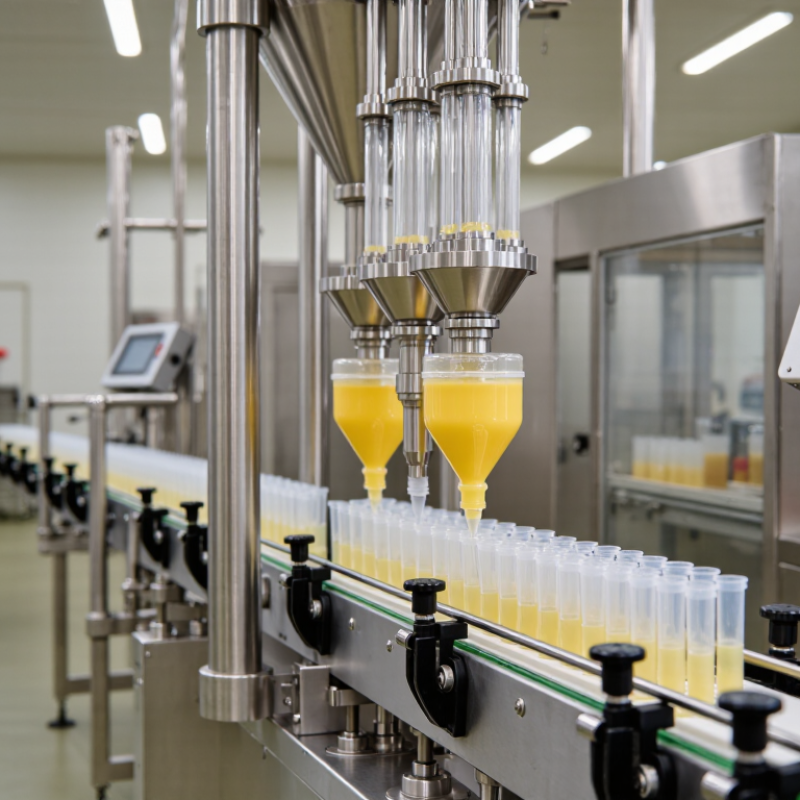
Choosing lip balm filling equipment in 2026 starts with the formula, not the machine. Waxes create structure and control release. Beeswax, candelilla wax, and plant-based blends melt at different temperatures. Oils affect flow, gloss, and cooling behavior. A formula rich in soft oils may require gentle heating and accurate dosing. A harder wax blend may need stronger agitation. Do not trust viscosity measured at room temperature alone. The product may flow easily at 75°C but become sluggish during filling.
Tips: Test the complete formula before selecting equipment. Record melting point, filling temperature, viscosity, and cooling time. Use a heated hopper when the balm solidifies quickly. Consider a scraper or slow-speed agitator if wax settles. Check nozzle size with real samples, not water. Small details matter. They often do.
From practical trials, piston filling systems can provide stable volume when viscosity changes slightly. However, they may struggle with formulas containing particles or unstable air bubbles. Heated pipelines can reduce blockage, but excessive heat may affect fragrance, color, or sensitive oils. Leave space for adjustment. Formulas are rarely perfect on the first trial. I have seen a balm fill smoothly at the start, then drag near the hopper wall after twenty minutes. That behavior suggests poor temperature balance, not simply a weak pump. Choose equipment with controllable heating, easy cleaning, and measurable settings. Reliable records make future formulation changes less risky.
| Formulation Dimension | Typical Lip Balm Range | What It Controls | Filling Equipment Implication | Recommended Equipment Feature |
|---|---|---|---|---|
| Total Wax Content | 15–35% by weight | Stick hardness, shape retention, glide, and resistance to heat deformation. | Higher wax levels usually require stronger heating and more reliable temperature control to maintain a pumpable melt. | Heated hopper, heated feed lines, insulated valves, and independent temperature zones. |
| Beeswax | 5–20% by weight | Structure, adhesion, firmness, and a characteristic softening profile. | Beeswax melts over a range rather than at one exact temperature, so the product should be fully melted before filling. | Agitated jacketed tank and a filling system capable of handling gradually changing viscosity. |
| Carnauba Wax | 1–8% by weight | Hardness, gloss, heat resistance, and stick stability. | Its high melting range can increase the required batch and line temperatures, especially in firm stick formulas. | High-temperature-compatible tank, seals, hoses, and positive-displacement metering pump. |
| Candelilla Wax | 1–10% by weight | Firmness, film formation, and a plant-based alternative to some animal-derived waxes. | Can increase viscosity and may require a larger safety margin between the melting temperature and the filling temperature. | Heated nozzle block, short product path, and adjustable filling speed. |
| Vegetable and Mineral Oils | 45–80% by weight | Spreadability, emollience, skin feel, and the liquid phase of the formula. | Low-viscosity oil-rich formulas can drip or string if the nozzle shutoff is not precise. | Anti-drip shutoff nozzle, calibrated dosing control, and gentle mixing to reduce aeration. |
| Butter Ingredients | 5–30% by weight | Richness, cushion, melting feel, and conditioning properties. | Butters can crystallize or change texture if cooling is too slow or uneven after filling. | Controlled cooling tunnel or cooling plate with stable airflow and temperature monitoring. |
| Pigments and Mineral Colorants | 0.1–10% by weight | Color intensity, opacity, and visual uniformity. | Undispersed particles can cause nozzle blockage, shade variation, or abrasive wear in the product path. | Efficient pre-dispersion, sanitary agitator, suitable nozzle diameter, and easy-clean piping. |
| Flavor and Fragrance | 0.05–1.0% by weight | Consumer sensory profile and product identification. | Volatile components may be lost if the product is held at excessive temperatures for too long. | Short residence time, covered holding tank, and accurate low-volume dosing capability. |
| Active Ingredients | Formula-dependent; often below 5% | Functional claims such as moisturization, protection, or soothing performance. | Some actives are heat-sensitive or poorly soluble and may require addition during a controlled cooling stage. | Separate premix vessel, low-shear agitation, and validated temperature-based addition point. |
| Filling Temperature | Typically 60–85°C | Product flow, surface finish, crystallization behavior, and container compatibility. | The correct temperature depends on the highest-melting ingredient and the formula’s viscosity; excessive heat can damage sensitive ingredients. | Closed-loop temperature control with independent sensors at the tank, hose, and nozzle. |
| Melting Point of the Formula | Typically 45–75°C | Heat resistance during storage and the temperature at which the balm softens or liquefies. | The filling temperature must remain high enough for stable flow but should not be unnecessarily far above the formula melting range. | Adjustable heating capacity and recipe-based temperature settings rather than fixed-temperature operation. |
| Apparent Viscosity at Filling | Approximately 1,000–50,000 mPa·s | Required pumping force, dosing accuracy, nozzle behavior, and filling speed. | High-viscosity products need positive-displacement metering; low-viscosity products need precise shutoff control. | Servo-driven piston or gear pump, variable-speed control, and product-specific nozzle selection. |
| Shear Sensitivity | Low to moderate; formula-dependent | Air incorporation, crystal structure, texture, and pigment dispersion. | Excessive pumping or mixing can introduce air or alter the final texture of structured balms. | Low-shear agitator, controlled pump speed, and optional vacuum deaeration. |
| Cooling and Setting Time | Approximately 10–60 minutes | Surface smoothness, shrinkage, sinkholes, and final stick integrity. | Uncontrolled cooling can create cracks, frosting, uneven tops, or poor release from molds. | Consistent cooling environment, adjustable conveyor dwell time, and temperature logging. |
| Container Format | Stick, pot, tube, or mold | Required dose volume, filling direction, cooling method, and finishing process. | Different formats require different nozzles, indexing systems, change parts, and product-release procedures. | Tool-less or quick-change parts, recipe storage, and format-specific dosing programs. |
| Dose Accuracy Target | Commonly ±1–2% of nominal fill | Label compliance, yield, appearance, and batch-to-batch consistency. | Accuracy depends on temperature stability, pump repeatability, calibration, and consistent container positioning. | Servo metering, load-cell or gravimetric verification, automatic calibration, and reject control. |
| Production Scale | Laboratory to continuous multi-nozzle production | Required throughput, labor level, changeover time, and automation complexity. | Small batches prioritize flexibility; larger batches benefit from synchronized dosing, indexing, and in-line inspection. | Modular machine design with scalable nozzle count and recipe-controlled automation. |
| Cleaning and Sanitation | Product-dependent; typically daily or between formulas | Cross-contamination control, color changeover quality, and operating uptime. | Waxy residues can solidify inside hoses, valves, and nozzles if the system is difficult to drain or heat. | Sanitary fittings, drainable lines, heated cleaning mode, removable nozzles, and easy-access product-contact parts. |
| The ranges shown are typical formulation and process-planning values, not universal specifications. Final equipment settings should be confirmed through pilot trials using the actual wax blend, oils, pigments, container material, target fill weight, and cooling conditions. | ||||
Waxes create structure, while oils control flow, gloss, and cooling behavior. A harder wax blend may need stronger agitation. Soft oils may require gentle heating and accurate dosing. Test the complete formula before choosing equipment.
Record melting point, filling temperature, viscosity, and cooling time. Measure viscosity at filling temperature, not only room temperature. A balm may flow at 75°C but become sluggish during filling. Small details matter.
Use a heated hopper when the balm solidifies quickly. Heated pipelines can reduce blockage near the nozzle. Avoid excessive heat, because fragrance, color, or sensitive oils may change. Temperature balance matters more than maximum heat.
A balm may fill smoothly at the beginning, then drag near the hopper wall. This often suggests poor temperature balance. It may not mean the pump is weak. A scraper or slow agitator can help when wax settles.
Piston systems can provide stable volumes when viscosity changes slightly. They may struggle with particles or unstable air bubbles. Check nozzle size with real balm samples, not water. Water behaves differently.
Look for smooth surfaces, accessible parts, hygienic welds, and sealed product-contact areas. Avoid unnecessary dead zones in the filling path. These areas can trap residue and increase cleaning difficulty. Photos can hide poor access.
Request certified 316L stainless steel for product-contact components. Review material certificates, surface-finish details, seals, and gasket records. Ask for calibration, traceability, change-control, and validation documents. A brochure is not evidence.
Match automation with daily production volume and formula-change frequency. Semi-automatic equipment may suit seasonal batches. Automatic lines may reduce labor during long runs. Measure cleaning, drying, setup, maintenance, energy, and training costs. Our early estimate missed hose drying time.
Choosing the right Lip Balm Filling Equipment starts with understanding the product formulation. Waxes, oils, viscosity, and melting point directly affect heating requirements, flow behavior, nozzle selection, and filling consistency. Equipment should also match the planned batch size and production rate, especially when targeting output between 15 and 60 units per minute. Adjustable filling parameters and stable temperature control can help maintain smooth operation across different formulas.
Before making a purchase, evaluate fill accuracy of approximately ±1%, reliable heating control, and nozzle performance to reduce waste and inconsistencies. The machine should feature a hygienic GMP-oriented design, 316L stainless steel contact parts, and support applicable requirements such as FDA 21 CFR Part 211. Finally, compare automation level, cleaning time, energy consumption, maintenance needs, and total ownership cost. A balanced choice will improve productivity, simplify sanitation, and provide dependable long-term performance.

 haoruide