Choosing the right Cosmetics Filling Machines can determine whether a product reaches customers smoothly or stops beside a leaking nozzle. The decision involves more than speed. Product viscosity, container shape, filling volume, cleaning routines, and future production plans all matter. A light serum may require different handling from a thick cream or tinted balm.
Packaging automation consultant Sean O’Leary offers a practical reminder: “The best filling machine is the one that matches the product, container, and production reality.” This principle sounds simple, but many buyers overlook it. A machine that fills 120 bottles per minute may appear impressive. However, it can waste material when the formula foams or drips. I have seen production plans fail because the container sample was never tested. Small details matter.
A reliable evaluation should include trial filling, accuracy checks, changeover time, and operator access. Ask whether the system supports stainless-steel contact parts and documented cleaning procedures. Confirm that the supplier can provide training, spare parts, and responsive technical support. Consider servo control, piston or peristaltic technology, and the machine’s compatibility with your formula. Do not choose only by the lowest quotation. That is tempting, but incomplete. A cheaper machine may demand more manual adjustment, creating uneven fills and slower output. Even experienced teams can misjudge expansion needs. Leave room for honest reflection: your current process may be the real limitation. The best Cosmetics Filling Machines should improve consistency, protect product quality, and remain practical for everyday staff.
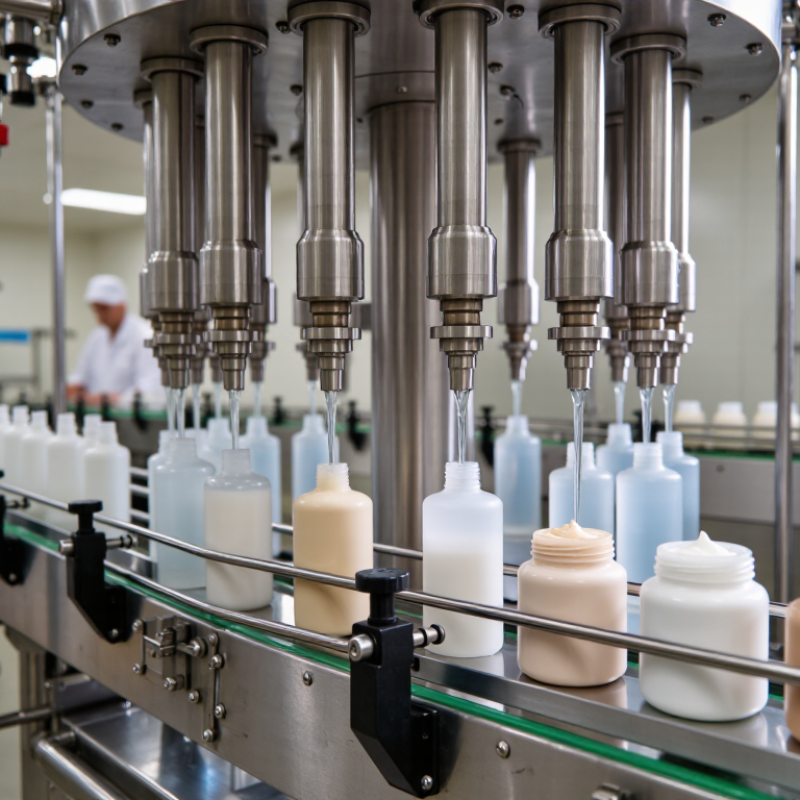
How to Choose the Best Cosmetics Filling Machine?
Begin by defining your cosmetic product and filling requirements. A lightweight toner needs different handling from a thick face cream. Measure viscosity at actual production temperatures, not only in the laboratory. Small details matter.
Check whether the formula contains oils, powders, alcohol, acids, or delicate active ingredients. These components influence pump design, sealing materials, cleaning procedures, and filling speed. Air-sensitive creams may require diving nozzles or vacuum assistance.
A balm may need heated lines and a temperature-controlled hopper. Your container also matters. Narrow bottles, jars, tubes, and airless packs demand different nozzle sizes and positioning accuracy. A beautiful sample can still hide unstable dosing.
Market pressure makes this decision more important. McKinsey’s 2023 beauty market report forecasts the global beauty industry could reach about 580 billion dollars by 2027. More product variations may increase changeovers and cleaning time. Therefore, calculate target output, fill-volume tolerance, batch size, and acceptable product loss before requesting quotations.
ISO 22716 guidance also emphasizes controlled production and documented hygiene practices. A machine that fills quickly but creates residue may become expensive. I have seen specifications focus too heavily on speed. That is a mistake worth questioning.
Ask for trials using your real formula, container, and temperature. Record accuracy, foaming, dripping, cleaning time, and operator adjustments. The best choice is not always the fastest machine.
Choosing the best cosmetics filling machine starts with the product, not the machine price. According to Fortune Business Insights, the global filling machine market was valued at about USD 7.39 billion in 2023. That growth reflects demand for faster, cleaner, and more consistent filling lines. Track the details.
Gravity fillers suit thin lotions and cleansing waters. They use product weight and tank height to control flow.
Overflow fillers maintain a fixed liquid level, creating uniform bottles. This helps when shelf appearance matters.
Piston fillers draw a measured volume into a cylinder, then discharge it through a nozzle. They handle creams, gels, and thicker masks effectively. Peristaltic pumps move product by compressing flexible tubing. This reduces product contact with machine parts and supports easier changeovers. Gear pumps provide steady flow, but shear and heat can affect sensitive formulas. Small nozzles improve accuracy, yet they may clog with particles or heavy emulsions.
A 2024 report from Grand View Research projects continued expansion in the cosmetics market through 2030. That pressure makes repeatable dosing increasingly important.
In practice, test viscosity at production temperature, not room temperature. Trial runs matter. Operators should record fill weight, dripping, foam, cleaning time, and container tolerance.
I once underestimated air entrapment in a thick cream; the machine was accurate, but the jars looked underfilled. That mistake still deserves attention. A reliable choice balances operating principle, sanitation access, speed, and real product behavior.
Choosing a cosmetics filling machine starts with three measurable questions: capacity, accuracy, and container compatibility. Grand View Research valued the global cosmetic packaging market at approximately $32.74 billion in 2022. That scale increases pressure on filling lines, but maximum speed is not always the best target.
Measure actual output, not brochure speed. A machine rated at 60 containers per minute may slow sharply with thick creams, narrow openings, or frequent changeovers. Trial runs should record hourly output, cleaning time, and rejected units. Filling accuracy matters equally. A 0.5% error can waste substantial material across thousands of containers. Check the dosing method, calibration process, and performance at different viscosities. Small differences matter.
Container testing is often underestimated. Glass jars, soft tubes, airless bottles, and recycled plastic may react differently to pressure and handling. The Ellen MacArthur Foundation reports that packaging accounts for around 40% of global plastic use, increasing interest in lighter and recyclable formats. These formats can deform during filling. Ask for tests using your exact container, closure, formula, and temperature. ISO 22716 supports controlled cosmetic manufacturing practices, but it does not guarantee machine suitability. That decision requires documented trials. I would also leave capacity below the theoretical maximum. Real production is rarely perfect.
When choosing a cosmetics filling machine, hygiene should be checked before speed. Product-contact parts should use stainless steel, preferably 316L, with smooth welds and no hidden corners. The design should support quick disassembly, drainage, and cleaning validation. ISO 22716, the cosmetics GMP guideline, emphasizes controlled equipment, sanitation, and documented procedures. A clean-looking machine is not always a hygienic machine.
Material compatibility matters too. Oils, emulsions, gels, and alcohol-based formulas may react differently with seals and hoses. Ask for compatibility records for silicone, EPDM, PTFE, or other contact materials.
Grand View Research estimated the global cosmetics market at about USD 446 billion in 2023, with continued growth expected. That scale increases pressure for repeatable filling accuracy.
Automation can help through servo-driven dosing, recipe storage, automatic nozzle adjustment, and electronic batch records. However, excessive automation may create unfamiliar faults. Operators still need practical training.
Tips: Inspect a demo machine with your actual formula. Measure fill-weight variation after several cycles. Check whether operators can remove nozzles without special tools. Review preventive-maintenance intervals, spare-part availability, sensor calibration, and cleaning records. PMMI’s manufacturing research repeatedly identifies labor skills and equipment uptime as major operational concerns. I would not choose the fastest machine first. A slower unit with accessible parts may reduce downtime and product loss. That assumption deserves testing.
The cheapest cosmetics filling machine is rarely the least expensive choice. Compare the full cost, not only the quotation. Include filling nozzles, molds, installation, operator training, spare parts, energy use, and cleaning time. A machine that saves fifteen minutes per batch may recover its higher price surprisingly quickly. Ask for a clear cost breakdown. Hidden fees create unpleasant surprises.
Supplier support also affects long-term value. Request practical evidence, such as factory acceptance testing, operating manuals, maintenance schedules, and response times. Reliable suppliers should explain setup limits and product compatibility honestly. They should also provide replacement parts and technical assistance after installation. I once focused too heavily on machine specifications and ignored service coverage. That was a costly oversight. Support quality can matter more than a polished demonstration.
Tips: Calculate the cost per filled unit over five years. Test your thickest cream and smallest container before deciding. Check whether operators can change formats without special tools. Ask how quickly damaged parts can be replaced. Leave room for error; production rarely runs perfectly. A flexible machine may handle future product changes better than a faster, rigid model. Review cleaning procedures carefully, because difficult cleaning can increase downtime and create quality risks. Get every service promise in writing. Supplier confidence should appear in documents, not only in conversation.
Gravity fillers work well with thin liquids. They use product weight and tank height to control flow. Overflow fillers keep a consistent liquid level for uniform bottles.
Piston fillers measure product inside a cylinder before discharge. They suit thicker formulas and controlled dosing. Test the product at its actual production temperature.
It moves liquid by compressing flexible tubing. The product mainly touches the tubing interior. This can simplify cleaning and formula changeovers.
Gear pumps provide steady flow, but heat and shear may affect some formulas. Check texture, temperature, and appearance during trials. A smooth flow is not always gentle enough.
Record actual containers per hour, not only the stated machine speed. Thick creams, narrow openings, and changeovers can reduce output. Leave capacity below the theoretical maximum.
Check fill weights across different viscosities and operating periods. Review calibration, dripping, foam, and rejected units. Small differences matter.
Glass jars, soft tubes, airless bottles, and recycled plastic behave differently. Pressure may deform lightweight packaging. Test the exact container, closure, formula, and temperature.
Air inside thick cream can make jars appear underfilled after dosing. I once underestimated this problem. Inspect settling time, foam, and visible product level before changing the machine.
Record output, fill weight, dripping, foam, cleaning time, and container tolerance. Check sanitation access and changeover effort. Trial runs matter.
Choosing the right Cosmetics Filling Machines starts with a clear understanding of your product and production requirements. Consider the formula’s viscosity, texture, temperature sensitivity, and whether it contains particles or delicate ingredients. Then compare suitable filling principles, such as piston, pump, gravity, or peristaltic systems, based on how they handle your product. Evaluate the required output, filling accuracy, container shapes and sizes, and the flexibility needed for future product changes.
Hygiene and reliable operation are also essential. Look for corrosion-resistant materials, easy-to-clean contact parts, sanitary designs, and automation features that reduce manual work and improve consistency. Maintenance requirements, changeover time, spare-part availability, and operator safety should be reviewed before making a decision. Finally, compare the total cost of ownership rather than focusing only on the purchase price. A dependable supplier, effective technical support, training, and long-term machine durability can significantly improve productivity and provide better value over time.

haoruide