7 Tips for Choosing a Lip Balm Labeling Machine?

Time:2026-09-21 Author:Henry
0%

Choosing the right Lip Balm Labeling Machine is more than comparing speed, price, and machine size. Small tubes create large technical challenges. Their curved surfaces, lightweight bodies, narrow label areas, and glossy finishes can expose even minor alignment errors.

Grand View Research estimates that the global lip balm market will continue expanding through 2030, supported by rising demand for personal-care products and premium packaging. Smithers also reports continued growth in pressure-sensitive labels, driven by branding, traceability, and short-run production. These trends create pressure for cleaner application, faster changeovers, and fewer rejected tubes. A practical warning remains: market growth does not guarantee a good equipment purchase.

Labeling consultant and industry educator Mike Fairley emphasizes, “The label, adhesive, and container must be evaluated as one system, not as separate components.” That principle matters when a balm tube rotates, flexes, or carries a small wraparound label. A reliable Lip Balm Labeling Machine should handle your actual tube diameter, label material, adhesive, production speed, and inspection requirements.

This guide presents seven practical selection tips. It examines machine compatibility, labeling accuracy, automation level, changeover time, inspection functions, maintenance support, and total operating cost. Some assumptions may fail during real production. A machine that performs well on samples may struggle after several hours of heat, dust, or adhesive buildup.

Test the real materials.

Speak with suppliers honestly. Request trial runs using your own tubes and labels. Measure rejected units, not only advertised speed. The best decision is rarely the fastest machine. It is the one that delivers stable results every day.
7 Tips for Choosing a Lip Balm Labeling Machine?

What Is a Lip Balm Labeling Machine?

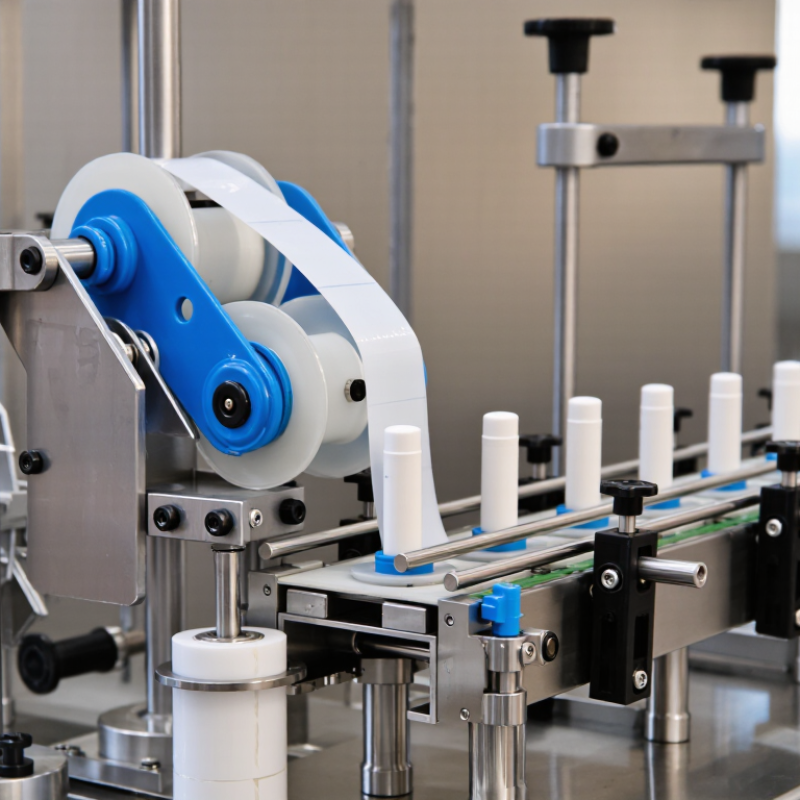
A lip balm labeling machine is equipment designed to apply labels accurately around small tubes, jars, or containers. It aligns each container, dispenses the label, and presses it firmly onto the surface. Some models handle one label, while others apply front, back, or wraparound labels.

In practical production, the machine usually includes a conveyor, container guide, label roll, sensor, and control panel. The sensor detects each lip balm container before labeling begins. Adjustable rollers help prevent wrinkles, tilted labels, and loose edges. This matters because lip balm packaging often has a narrow diameter and a slightly curved surface.

I have found that container stability affects results more than expected. A small gap between guides can create visible label shifts. Manual testing should include different tube materials, label adhesives, and speeds.

No machine is perfect. Humidity, dust, and uneven containers can still cause errors. A reliable selection should match the container size, label dimensions, daily output, and operator skill. Clear settings are valuable, especially when workers change products during a busy shift. A machine that runs quickly but wastes labels may not be the most efficient choice. Careful observation remains necessary.

Assess Production Capacity and Labeling Requirements

Assess Production Capacity and Labeling Requirements

A lip balm line should match real output, not an impressive brochure number. PMMI’s 2024 State of the Industry report identifies labor availability and operational efficiency as major packaging concerns. This matters when one operator feeds tubes, checks labels, and manages changeovers. Record your hourly output, container diameter, label height, and daily production schedule. Then compare those figures with the machine’s stable operating speed, not its maximum speed.

Small lip balm tubes create difficult labeling conditions. Their narrow surfaces leave little room for artwork, ingredients, batch codes, and net quantity information. A wrap-around labeler may need adjustable rollers and precise registration control. For sensitive formulas, select materials and adhesives that resist oil, heat, and surface condensation. The U.S. Food and Drug Administration requires cosmetic labels to present essential information clearly, so label placement and print quality deserve practical testing.

Test the actual tube.

Smithers’ packaging market analysis places global packaging consumption above one trillion U.S. dollars annually, increasing pressure for efficient, flexible equipment. However, a faster machine may create more waste during size changes. Run at least one trial with your smallest tube, slowest adhesive, and longest production shift. Measure rejected labels, downtime, operator adjustments, and material loss. I would also inspect tubes after storage and transport; a label that looks perfect at application can lift later. That overlooked result can change the equipment decision.

7 Tips for Choosing a Lip Balm Labeling Machine

Assess production capacity and labeling requirements before selecting equipment. The chart compares typical operating speeds for common labeling-machine configurations used for cylindrical lip balm containers.

How to use this comparison: Match the machine’s practical throughput—not only its maximum rated speed—to your required output, container dimensions, label material, application position, changeover frequency, and acceptable labeling tolerance. Actual performance varies with product geometry, operator loading, label design, and inspection requirements.

Check Container Compatibility and Labeling Precision

Choosing a lip balm labeling machine starts with the container, not the machine. Measure tube diameter, height, shoulder shape, and surface curvature. Check whether the packaging is glossy, soft, tapered, or slightly oval. These details affect feeding and label contact. Request sample containers before purchasing. Run them through a trial line. Test it twice. A label that looks centered on a screen may drift on a real tube, especially when the surface flexes during application. I have seen operators blame the sensor when the actual problem was inconsistent container spacing.

Labeling precision depends on more than advertised speed. Inspect the machine’s adjustment range, sensor response, roller pressure, and container stabilization system. Confirm that it can place labels within your required tolerance, not merely claim high accuracy. Measure the leading-edge position on at least 50 samples.

Small errors matter. Compare results across different fill weights and production speeds. A nearly empty tube may rotate differently from a full one. Adhesive performance also deserves attention. Check label adhesion after handling, temperature changes, and exposure to balm residue. Clean surfaces are essential, but production areas are rarely perfect.

Ask for changeover instructions and observe how quickly operators can repeat settings. Clear scales, accessible controls, and documented maintenance reduce avoidable variation. Verify that spare sensors and wear parts are available through a dependable service channel. A machine can perform well during a demonstration and still disappoint during long shifts if alignment loosens or cleaning is awkward. Do not accept a beautiful sample as final proof. Record trial results, including rejected labels, stoppages, and operator adjustments. I would also leave room for doubt: the first test may hide problems that appear after several hours of continuous feeding.

Compare Automation Features and Changeover Efficiency

7 Tips for Choosing a Lip Balm Labeling Machine

Choosing a lip balm labeling machine is less about speed alone. It is about automation, stability, and fast product changeovers. The International Federation of Robotics reported 541,302 industrial robots were installed worldwide in 2023. That figure reflects a wider shift toward automated production. Still, automation should solve a real bottleneck, not decorate a quotation.

Check whether the machine offers automatic label feeding, vision inspection, recipe storage, and servo-controlled positioning. These features can reduce manual adjustments between lip balm sizes. Ask for measured changeover time, not a sales estimate. A practical trial should include tubes with different diameters, label materials, and adhesive behavior. Watch the operator. Can one person load a new recipe without searching through menus? Small delays become expensive during short production runs.

Compare tool-free adjustments, guided setup screens, and automatic sensor calibration. PMMI industry reports repeatedly identify labor availability and workforce skills as major packaging challenges. Simple controls matter. A machine that reaches high speed but needs constant expert attention may underperform. No machine is perfect. I would also record rejected labels, cleaning time, and restart losses during testing. These details are often missed. Calculate changeover efficiency using actual minutes, waste, and output, then compare the result with your expected daily schedule. Look for remote diagnostics, but confirm operator training and service response times before choosing.

Evaluate Cost, Maintenance, Support, and Compliance

Choosing a lip balm labeling machine requires more than checking its purchase price. Production speed, label accuracy, maintenance time, technical support, and compliance should guide the decision.

Tip 1: Compare total cost. Include installation, training, spare parts, electricity, and rejected labels. A cheaper machine may become expensive after frequent adjustments. Tip 2: Inspect maintenance access. Operators should reach rollers, sensors, and adhesive contact points without complicated tools. Ask how often cleaning and calibration are required. Tip 3: Test real containers. Lip balm tubes may be narrow, curved, or slightly uneven. Run samples at production speed and measure label alignment.

Tip 4: Evaluate support quality. Request clear response times, service documentation, and remote troubleshooting options. Support should help during changeovers, not only during installation. Tip 5: Check spare-part availability. A missing sensor can stop a production line for days. That risk is easy to underestimate. Tip 6: Review compliance features. Confirm readable batch information, product details, and label placement requirements for your target markets. Keep records of testing and operator training. Requirements can differ, so verify them with qualified regulatory professionals.

Tip 7: Ask for a practical acceptance test. Measure speed, accuracy, waste, and restart performance using your own containers. I once focused too heavily on hourly output and overlooked changeover time. That was a useful mistake. A machine that runs quickly but changes slowly may reduce real productivity. Choose measurable reliability over impressive claims.

7 Tips for Choosing a Lip Balm Labeling Machine: Cost, Maintenance, Support, and Compliance

Tip Evaluation Dimension What to Check Typical Data or Benchmark Why It Matters for Lip Balm Recommended Decision Priority
1 Purchase Cost Compare the machine price with included applicators, sensors, change parts, controls, installation, and operator training. Indicative new-equipment ranges: manual or tabletop systems often cost about US$2,000–US$8,000; semi-automatic systems about US$8,000–US$25,000; automatic inline systems commonly start around US$25,000 and may exceed US$75,000. A low initial price may exclude format parts, commissioning, or tooling needed for different lip balm containers. Request a total delivered-cost quotation with every accessory and service item listed separately. High
2 Total Cost of Ownership Estimate electricity, compressed air, labels, changeover labor, spare parts, preventive maintenance, and expected downtime. For many small and medium operations, labor and downtime can exceed energy costs. A three-year comparison is more useful than comparing purchase prices alone. Lip balm packaging frequently involves short runs and multiple container sizes, making changeover time a major operating cost. Calculate cost per labeled unit using realistic production volume, reject rate, labor rate, and maintenance assumptions. High
3 Container and Label Compatibility Verify container diameter, height, surface material, label dimensions, adhesive type, wrap angle, and product spacing. Many tabletop wrap-around machines handle cylindrical containers in approximately the 20–100 mm diameter range, but the usable range varies by model and tooling. Wax-based lip balm can leave residue on containers or guide rails, while small-diameter tubes require accurate sensing and product handling. Provide actual filled containers and labels for a documented factory acceptance test before purchase. High
4 Speed and Accuracy Review rated speed, tested speed, label-placement tolerance, reject handling, and performance with the actual package. Typical operating ranges are approximately 15–40 containers per minute for basic tabletop systems and 40–150 containers per minute for suitable automatic inline systems. Actual output depends on container stability and label design. Higher speed is not beneficial if labels wrinkle, overlap incorrectly, or require frequent manual correction. Choose a machine based on stable net output and acceptable placement accuracy, not maximum advertised speed. High
5 Maintenance and Sanitation Check tool-free access, cleanable surfaces, guarding, lubrication points, sensor protection, spare-part availability, and maintenance instructions. Preventive checks commonly include cleaning adhesive residue, inspecting rollers and belts, verifying sensor alignment, and checking label tension. The schedule should follow the manufacturer’s manual and operating conditions. Residue and dust can affect traction, sensor readings, and label placement; difficult-to-clean areas increase changeover and contamination risks. Prefer stainless-steel contact areas, guarded moving parts, accessible wear components, and a written preventive-maintenance plan. High
6 Technical Support and Spare Parts Confirm response time, remote diagnostics, training, warranty terms, local service coverage, documentation language, and parts lead time. A practical purchasing target is a written support response within one business day, critical spare parts available within a few business days, and at least a 12-month equipment warranty. A failed sensor, drive belt, or applicator roller can stop a packaging line even when the rest of the production process is ready. Purchase a recommended spare-parts kit and obtain escalation contacts before commissioning. Medium
7 Safety and Regulatory Compliance Review applicable machinery-safety requirements, electrical certification, guarding, emergency stops, risk assessment, and documentation for the destination market. Common references may include applicable OSHA requirements in the United States, CE machinery and electrical requirements in the European Economic Area, and recognized electrical safety standards such as IEC 60204-1 where applicable. Compliance responsibilities depend on the country, machine configuration, integration method, and whether the equipment is imported or modified. Ask for a declaration of conformity or equivalent documentation, electrical schematics, risk assessment, operating manual, and safety-test records. High

Note: Cost, speed, and size figures are indicative industry planning ranges rather than guaranteed quotations. Confirm final specifications through container trials, label tests, and a compliance review for the installation country.

FAQS

What does a lip balm labeling machine do?

It applies labels around small tubes, jars, or containers. A sensor detects each container. Rollers press the label firmly.

Which containers can these machines handle?

They can handle narrow, curved, glossy, soft, tapered, or slightly oval containers. Measure diameter, height, shoulders, and surface curvature before testing. Small gaps matter.

Why is container stability important?

Uneven spacing can shift labels visibly during application. Adjustable guides keep containers centered. A small gap may create a large label error.

How should labeling accuracy be tested?

Run your own containers through the machine at production speed. Measure the leading-edge position on at least 50 samples. Test it twice.

Can different fill weights affect labeling?

Yes. Nearly empty tubes may rotate differently from full tubes. Compare alignment across several fill weights and operating speeds. This detail is easy to miss.

What problems can occur during daily operation?

Humidity, dust, balm residue, and uneven containers can cause wrinkles or loose edges. Cleaning and stable feeding reduce these problems. No machine is perfect.

What maintenance features should operators check?

Rollers, sensors, and adhesive contact points should be easy to reach. Ask about cleaning, calibration, spare parts, and wear-part replacement. Awkward cleaning becomes expensive.

How should the total cost be evaluated?

Include installation, training, electricity, maintenance, spare parts, and rejected labels. A lower purchase price may hide frequent adjustment costs. That surprised me.

What should a practical acceptance test measure?

Measure speed, label accuracy, waste, stoppages, and restart performance. Also record changeover time with your containers. Fast output is not enough.

What support and documentation are useful?

Request clear setup instructions, maintenance records, response times, and troubleshooting guidance. Operators need help during product changes, not only installation. Keep training records.

Conclusion

Choosing the right Lip Balm Labeling Machine is essential for achieving consistent product quality, efficient production, and a professional appearance. This guide explains what a lip balm labeling machine does and how to match its capabilities with your production capacity and labeling requirements. Consider the expected output, label size, application speed, and whether the machine can handle different packaging shapes and materials. Container compatibility and labeling precision are especially important for preventing wrinkles, misalignment, and product waste.

The guide also highlights the value of automation features, easy adjustments, and fast changeovers when producing multiple lip balm varieties. Before making a decision, compare the total cost of ownership, including installation, maintenance, spare parts, energy use, and technical support. A reliable machine should be simple to clean, easy to operate, and supported by clear documentation. Finally, confirm that its construction and operating processes meet relevant quality, safety, and compliance requirements for your production environment.

Henry

Henry

Henry is a dedicated marketing professional with a profound expertise in the company's offerings. With years of experience in the industry, he possesses an impressive understanding of the market dynamics and consumer behaviors that drive success. Henry is committed to sharing his insights through......