China Top 10 Mascara Filling Machine Manufacturers

Time:2026-10-21 Author:Sophia
0%

China’s mascara packaging sector is becoming more automated, precise, and export-focused. This article examines China Top 10 Mascara Filling Machine Manufacturers through practical manufacturing criteria.

Industry data supports this growing interest. Grand View Research identifies cosmetics packaging as a major global manufacturing market, driven by premium products, hygiene requirements, and faster product launches. The Business Research Company also reports continued expansion in cosmetics manufacturing, especially across Asia-Pacific markets. These trends increase demand for reliable Mascara Filling Machine systems that handle dense formulas, tapered tubes, and different brush assemblies.

Precision matters. A filling deviation of only 0.1 grams can affect product consistency, retail presentation, and customer trust. Modern equipment may include servo-driven piston pumps, stainless-steel contact parts, programmable filling volumes, and automatic nozzle cleaning. These details deserve closer attention.

Safety remains essential. ISO 22716 guidelines encourage controlled cosmetic production and documented hygiene practices. Buyers should also review CE conformity, electrical protection, material certificates, and factory validation records. Local compliance requirements may differ by destination market.

A machine can look impressive in a showroom. Production results are more important. Ask for viscosity tests, speed trials, cleaning demonstrations, and long-run accuracy records. Request evidence, not attractive promises.

No ranking is permanently objective. That is the uncomfortable part. Supplier quality can change with components, service teams, and production conditions. This guide therefore compares technical capability, customization, after-sales support, export experience, and value. It aims to help brands, contract manufacturers, and packaging engineers make a more informed decision.
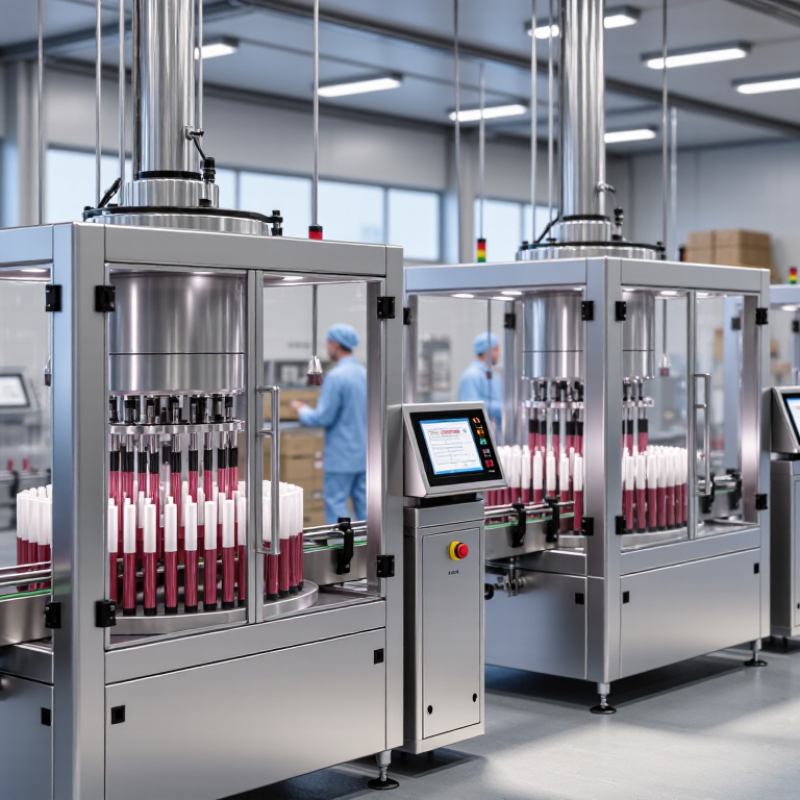
China Top 10 Mascara Filling Machine Manufacturers

What Is a Mascara Filling Machine?

A mascara filling machine is industrial equipment designed to dose mascara into containers with controlled speed and accuracy. It usually combines a hopper, piston or servo pump, filling nozzle, and conveyor system. The product moves through the machine while the nozzle deposits a measured volume into each tube.

Mascara formulas are often thick, fibrous, or sensitive to air. Therefore, the machine must manage pressure carefully and reduce splashing. A heated hopper may improve flow, but excessive heat can affect the formula. Operators should test viscosity, filling volume, nozzle size, and container shape before production. Small changes matter.

Cleanability is equally important. Product-contact parts should be removable, smooth, and suitable for approved sanitation procedures. In factories assessing China’s top ten mascara filling machine manufacturers, buyers should request filling accuracy records, trial samples, maintenance guidance, and operator training. Servo control can improve repeatability, yet it may increase system complexity. Manual adjustment can be useful during testing, but it may slow large orders. No machine fits every formula perfectly. A careful factory trial often reveals problems that brochures do not show.

How China’s Top 10 Mascara Machine Manufacturers Are Selected

China Top 10 Mascara Filling Machine Manufacturers

Selecting China’s top 10 mascara filling machine manufacturers requires evidence, not attractive brochures. Industry reports show continued growth in global beauty and personal care demand. Grand View Research valued the global cosmetics packaging market at more than USD 30 billion in 2023. This growth increases pressure for stable filling accuracy, fast changeovers, and cleaner production lines.

Our selection uses a practical scoring model. Verified manufacturing experience receives 25% of the score. Filling accuracy, speed, and machine stability receive another 25%. Quality control systems account for 20%, while customization and technical support share the remaining 30%. We review factory records, test mascara samples, inspect key components, and check documented customer feedback. ISO 9001 certification supports credibility, but certification alone proves little. A machine must still handle thick formulas, fiber-rich textures, and different brush sizes without excessive dripping.

Tips: Ask for a live filling test using your own formula. Request data for weight deviation, output per minute, cleaning time, and rejected units. Confirm whether service engineers can respond quickly. Factory visits also matter. Photos can hide useful details.

No ranking is perfect. Some manufacturers report impressive speed but provide limited long-term data. Others offer careful testing but weaker documentation. That uncertainty should remain visible. A reliable shortlist must balance measurable performance, technical experience, transparent records, and practical after-sales support.

China Top 10 Mascara Filling Machine Manufacturers - How China’s Top 10 Mascara Machine Manufacturers Are Selected

Anonymized, criteria-based evaluation framework using measurable technical, quality, compliance, and service indicators

Evaluation Dimension Weight Measurable Indicators Verification Evidence Scoring Standard Maximum Score
Mascara Filling Performance 20% Filling accuracy, repeatability, product loss, and suitability for low-, medium-, and high-viscosity mascara formulas. Factory acceptance test, sample filling records, calibration documents, and customer-approved trial results. Full points require stable filling performance across the agreed product viscosity and package range. 20
Production Capacity 15% Documented output per minute, number of filling heads, cycle time, and compatibility with single- or multi-lane production. Technical datasheet, timed production test, and recorded output under defined operating conditions. Scores are based on verified output rather than the maximum theoretical speed stated in marketing materials. 15
Container and Formula Compatibility 12% Compatibility with bottle diameter, brush-wand assembly, cap format, fill volume, and formula characteristics. Approved drawings, change-part list, sample-run report, and documented format-change procedure. Full points require successful testing with the buyer’s actual container, brush, and mascara formula. 12
Automation and Process Control 12% Automatic indexing, filling, wiping, capping, torque control, sensor systems, alarms, and recipe management. Control-system demonstration, input/output list, machine layout, and operating manual. Higher scores are assigned to systems that reduce manual handling and provide traceable process settings. 12
Quality Management 10% Documented quality procedures, incoming inspection, in-process checks, final testing, and corrective-action handling. Quality manual, inspection records, nonconformance procedure, and applicable quality certificates. Full points require evidence of a controlled quality system supported by production and inspection records. 10
Safety and Regulatory Readiness 10% Machine guarding, emergency stops, electrical safety, risk assessment, documentation, and export-market requirements. Risk assessment, electrical diagrams, safety test records, declaration documents, and user instructions. Scores reflect documented conformity for the destination market; certificates are checked for scope and validity. 10
Sanitation and Cleanability 8% Product-contact material selection, removable parts, dead-space reduction, cleaning access, and changeover time. Material certificates, product-contact drawings, cleaning procedure, and observed disassembly test. Higher scores require practical cleaning access and clearly defined procedures for cosmetic production. 8
Customization and Integration 5% Ability to modify filling volume, container tooling, feeding systems, inspection devices, and upstream or downstream equipment. Engineering proposal, change-part drawings, interface specifications, and project references with technical scope. Points are awarded for technically documented customization, not for unsupported claims of flexibility. 5
After-Sales Support 5% Installation, operator training, spare-parts availability, remote troubleshooting, response time, and warranty terms. Service-level agreement, spare-parts list, training plan, warranty document, and support-contact procedure. Full points require defined service responsibilities and realistic support arrangements for the buyer’s location. 5
Commercial Transparency 3% Clarity of quotation, scope of supply, excluded items, delivery schedule, payment terms, and total ownership cost. Itemized quotation, contract draft, delivery plan, and documented list of consumables and spare parts. Higher scores are given to quotations that make technical and commercial assumptions easy to audit. 3
Total Weighted Evaluation Score 100

China’s Top 10 Mascara Filling Machine Manufacturers

China’s Top 10 Mascara Filling Machine Manufacturers

China’s top ten mascara filling machine manufacturers are judged by more than catalog photographs. In practical evaluations, I examine dosing accuracy, nozzle movement, cleaning access, and changeover time. These details affect every filled tube.

A dependable manufacturer should explain the filling principle clearly. Piston, servo, and vacuum-assisted systems suit different mascara textures. Thick formulas may need heated hoppers, slow agitation, or wider product passages. The machine should maintain stable fill weights without damaging fibers or creating air pockets. Operators also need readable controls, guarded moving parts, and simple parameter storage. Good documentation matters. So does responsive technical support.

Factory experience becomes visible during testing. I look for sample runs using the customer’s actual container, brush, and formula. Measurements should include fill-weight variation, reject rates, and cleaning time. A recorded trial is more useful than a polished promise. Reliable engineering teams usually provide drawings, utility requirements, spare-parts lists, and training plans. No supplier is perfect. Some published capacities may assume ideal conditions, while real production can be slower. That deserves questions. Buyers should inspect weld quality, seal materials, sensor placement, and after-sales response before signing. A careful comparison can reveal which manufacturer understands daily production.

China’s Top 10 Mascara Filling Machine Manufacturers

Because manufacturer names and brand-specific figures are excluded, this chart compares ten common mascara filling machine configurations using representative capacity benchmarks calculated from published operating ranges of approximately 5–80 units per minute.

Capacity is shown in units per hour and is calculated from nominal filling speeds under continuous operation. Actual output varies according to filling volume, product viscosity, nozzle count, container handling, and automation level.

Key Technologies Used in Mascara Filling Equipment

China’s top 10 mascara filling machine manufacturers compete through accurate, hygienic, and flexible equipment design. The most important technology is servo-driven piston filling. It controls volume precisely, even when mascara formulas become thick or contain fibers. In production trials, operators usually check ten consecutive fills by weight. Small deviations often reveal pressure changes, trapped air, or unstable material temperature.

A heated hopper and jacketed filling system can keep the formula moving smoothly. Gentle agitation prevents pigment and wax from settling without creating excessive bubbles. Many modern machines also use PLC controls, recipe storage, and touchscreen monitoring. These features help operators repeat proven settings across different package sizes. However, automation does not remove every risk. A poorly tuned agitator may damage texture or increase foam.

Anti-drip nozzles improve container cleanliness during withdrawal. Some systems combine diving nozzles with controlled suction, leaving less residue around the neck. Quick-change tooling also reduces setup time between mascara designs. For reliable sanitation, contact parts should use suitable stainless steel and support tool-free removal where practical. Cleaning validation still needs real testing, not only a polished specification sheet.

Vision sensors can inspect fill height, brush presence, and cap position before packing. Production records may track temperature, fill weight, alarms, and operator adjustments. These details support traceability and maintenance decisions. In my experience, the best equipment is not always the fastest. Stable dosing, easy cleaning, and clear troubleshooting often create better long-term results. Speed matters, but consistency matters more.

How to Compare and Choose a Chinese Mascara Machine Manufacturer

China Top 10 Mascara Filling Machine Manufacturers

Comparing Chinese mascara machine manufacturers requires more than checking price lists. Start with filling accuracy, speed, and compatibility with your formula. Mascara may contain fibers, waxes, or thick pigments. Ask for a live test using your actual bulk material. Observe nozzle movement, dripping, air bubbles, and container cleanliness. A neat sample matters.

Review the machine structure in detail. Servo-driven filling systems usually offer better control than basic pneumatic units. Check the hopper jacket, agitator, filling range, and nozzle design. Ask how operators clean product-contact parts. Tool-free disassembly can save hours every week. Request drawings, electrical lists, manuals, and factory acceptance test records. Technical documents reveal more than attractive photographs.

Supplier experience also deserves careful checking. Request recent installation references from similar production lines. Confirm warranty coverage, response times, spare-part availability, and remote troubleshooting methods. Visit the factory if possible, and inspect assembly areas rather than only the showroom. Small gaps matter. During one evaluation, a machine met its speed target but struggled with a thicker formula. That weakness was easy to miss. Production trials should include several viscosities, different container sizes, and repeated runs. Do not accept a perfect demonstration as complete evidence. A reliable manufacturer discusses limitations openly and adjusts the design before shipment.

FAQS

How are the top mascara machine manufacturers selected?

Selection should rely on factory evidence, not attractive brochures. Manufacturing experience, accuracy, stability, quality control, customization, and technical support all matter.

What filling accuracy should buyers examine?

Request fill-weight variation data from repeated production runs. Check rejected units, dripping, and clean tube surfaces. One perfect sample proves little.

Why is a live filling test important?

Use your actual mascara formula, container, and brush. Observe nozzle movement, air bubbles, fiber damage, and product residue around each opening.

Which machine features support thick mascara formulas?

Thick formulas may need heated hoppers, gentle agitation, and wider product passages. The machine should prevent air pockets and unstable fill weights.

How can buyers compare machine speed fairly?

Ask for output per minute under defined conditions. Test several viscosities and container sizes. Published capacity may assume unusually ideal production.

What cleaning details should be inspected?

Check product-contact parts, seals, nozzles, and hopper access. Tool-free disassembly can reduce weekly cleaning time. Some designs still leave hidden residue.

Which technical documents should a manufacturer provide?

Request drawings, electrical lists, manuals, utility requirements, spare-parts lists, and acceptance-test records. Clear documents reveal engineering discipline.

How should after-sales support be evaluated?

Confirm warranty coverage, response times, remote troubleshooting, training, and spare-part availability. Ask for recent installation references. A quick promise is not proof.

Is a factory visit necessary?

It is strongly recommended when possible. Inspect assembly areas, weld quality, sensor placement, and component storage, not only the showroom.

Can one manufacturer suit every mascara production line?

Probably not. Formula thickness, brush size, container shape, and cleaning needs differ. A careful comparison may expose weaknesses before shipment.

Conclusion

This article provides a practical overview of the Mascara Filling Machine, explaining its role in accurately filling, sealing, and preparing mascara products for efficient production. It introduces the main criteria used to evaluate China’s top 10 mascara machine manufacturers, including manufacturing experience, equipment quality, filling precision, production capacity, customization options, technical support, and after-sales service. The selection approach focuses on objective performance and suitability for different production requirements rather than brand promotion.

The article also reviews the key technologies used in mascara filling equipment, such as precision dosing, controlled mixing, automatic container handling, temperature management, and quality inspection systems. In addition, it offers guidance on comparing Chinese manufacturers by examining machine specifications, compatibility with formulas and packaging, automation levels, maintenance requirements, delivery capability, and total operating value. Readers can use these considerations to identify reliable equipment and make a more informed purchasing decision for safe, consistent, and efficient mascara production.

Sophia

Sophia

Sophia is a dedicated marketing professional with an exceptional depth of knowledge about her company's products and services. With a keen understanding of market trends and customer needs, she crafts insightful blog posts that not only inform but also engage readers, enriching the company’s online......